|
|
 |
|
Harpacticoida ( Order ) |
|
|
|
Cervinioidea ( Superfamily ) |
|
|
| |
| | | |
| Aegisthidae Giesbrecht, 1892 ( Harpacticoida, Cervinioidea ) | | Syn.: | Pontostratiotidae A. Scott, 1909 (part., p.232) | | Ref.: | Giesbrecht, 1892 (p.78); Lang, 1948 a (p.171); Lang, 1948 a (p.171); Bowman & Abele, 1982 (p.10); Razouls, 1982 (p.732); Huys, 1988 (p.116, Rev.); Huys & Boxshall, 1991 (p.356, 409, 420, 460); Razouls, 1993 (p.312); Bradford-Grieve & al., 1999 (p.887, 968); Lee & Huys, 2000 (p.42: Rem.); Boxshall & Halsey, 2004 (p.17; 228: Def.; p.230: Key of Genera); Vives & Shmeleva, 2010 (p.87, Rem.) | | Rem.: | Total: 5 G: Aegisthus, Andromastax, Jamstecia, Nudivorax, Scabrantenna.
For Lee & Huys (2000, p.42) there exists some confusion over the precise homology and armature of the caudal rami in the family. Giesbrecht (1892) misinterpreted these appendages as extrelely long "setiferous" setae, each borne on a very short ramus which is itself largely incorporated into the anal somite. The earlier erroneous interpretation unfortunately persisted in the litterature. It has been difficult to assess the number of caudal setae in previous studies because the fragile caudal rami are either incomplete or broken off. The discovery of Scabrantenna yooi male revelealed the precise number of setae.
After Huys (1988, p.122) because of the combination of sexually dimorphic features in the cephalosome which is only approximated by Cervinia magna and some Metahuntemannia species, it is clear that the Aegisthidae occupy a unique place within the harpacticoida in general abnd within the Cervinioidea in particular. Aegisthids can be assigned to the Cervinioidea on the basis of, amonst other synapomorphies, the aesthetasc arrangement of the male A1
Ohtsuka & Nishida (2017, p.581) point to some augaptilid genera have specialized ''button setae'' on the maxillae (Mx2) and maxillipeds (Mxp), which may function as shock absirbers during prey capture (Matsuura & Nishida, 2000). | 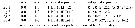 Issued from : G.A. Boxshall & S.H. Halsey in An Introduction to Copepod Diversity. The Ray Society, 2004, Part I, No 166. [p.228]. Armature formula of swimming legs P1 to P4. Nota: Female P5 elongate; exopod 1-segmented, confluent with or separate from basis, armed with outer basal seta plus 1 or 2 plumose and 5 serrate setae. Rxopod 2-segmented in male, (segment 1 fused to basis), armature comprising outer basal seta, outer spine from 1st exopodaj segment, and 2 inner plumode setae plus 4 or 5 outer and terminal spines on distal segment. - P6 represented by elongate free segment bearing 2 or 3 setal elements in both sexes. | | | | | (1) Aegisthus Giesbrecht, 1891 | |
| | Syn.: | Hensenella Dahl, 1895 a (p.171); Hensella : Monard, 1927 (p.148) | | Ref.: | Giesbrecht, 1892 (p.80, 573); van Breemen, 1908 a (p.181, clé spp.); A. Scott, 1909 (p.233); Wilson 1932 a (p.304); Rose, 1933 a (p.292, clé spp.); Klie, 1943 a (n°4, p.3); Davis, 1949 (p.71); Lang, 1948 a (p.173); Wells, 1970 (n°133, p.4); Boxshall, 1979 (p.203); Razouls, 1982 (p.732); Bodin, 1988 (p.16); Huys, 1988 (p.114, 117); Huys & Boxshall, 1991 (p.113); Lee & Huys, 2000 (p.69: Rem.); Boxshall & Halsey, 2004 (p.230); Vives & Shmeleva, 2010 (p.87, Rem., spp. key) | | Rem.: | type: Aegisthus mucronatus Giesbrecht,1891. 2 spp. + 1 doutbtful (inc. sed.)
For Huys (1988, p.124) the sexual dimorphism amongst the three known Aegisthus species is markedly constant. Apart from differences in the antennular sgmentation in the male, Boxshall (1979) found that the Mx2 and Mxp are closer to the female condition in A. aculeatus males than in A. mucronatus males. | | Remarks on dimensions and sex ratio: | | The mean size of the females is 1.872 mm (n=3) and of the males 1.38 mm (n=2). The size-ratio (M/F) is 0.746 or 74.6%. | | | | (2) Andromastax Conroy-Dalton & Huys, 1999 | |
| | Ref.: | Conroy-Dalton & Huys,1999 (p.409, 427, Déf.); Boxshall & Halsey, 2004 (p.230) | | Rem.: | 2 spp. | | | | (3) Jamstecia Lee & Huys, 2000 | |
| | Ref.: | Lee & Huys, 2000 (p.42, Def.); Boxshall & Halsey, 2004 (p.230) | | Rem.: | 1 sp. | | | | (4) Nudivorax Lee & Huys, 2000 | |
| | Ref.: | Lee & Huys, 2000 (p.4, Déf.); Boxshall & Halsey, 2004 (p.230) | | Rem.: | 1 sp. | | | | (5) Scabrantenna Lee & Huys, 2000 | |
| | Ref.: | Lee & Huys, 2000 (p.25); Boxshall & Halsey, 2004 (p.230) | | Rem.: | Total: 1 sp.
For Lee & Huys (2000, p.41) this genus can be considered a transitionary genus between the more primitive genera, Nudivorx and Andromastax, and the truly planktonic Aesisthidae, Aegisthus. It shares with Aegisthus the strongly reduced mouthparts and the distally elongate antennules in the male. S. yooi is particularly reminiscent of A. aculeatus | | | |
|
|
 Any use of this site for a publication will be mentioned with the following reference : Any use of this site for a publication will be mentioned with the following reference :
Razouls C., Desreumaux N., Kouwenberg J. and de Bovée F., 2005-2026. - Biodiversity of Marine Planktonic Copepods (morphology, geographical distribution and biological data). Sorbonne University, CNRS. Available at http://copepodes.obs-banyuls.fr/en [Accessed January 06, 2026] © copyright 2005-2026 Sorbonne University, CNRS
|
|
|
|




;)