|
|
 |
|
Calanoida ( Order ) |
|
|
|
Diaptomoidea ( Superfamily ) |
|
|
|
Acartiidae ( Family ) |
|
|
|
Acartia ( Genus ) |
|
|
|
Odontacartia ( Sub-Genus ) |
|
|
| |
Acartia (Odontacartia) amboinensis Carl, 1907 (F,M) | |
| | | | | | | Syn.: | no Acartia amboinensis (F): Sewell, 1914 a (p.243, figs.F) | | | | Ref.: | | | Carl, 1907 (p.12, 17, Descr.M, figs.M); Sewell, 1914 a (p.242, Rem. M only); Steuer, 1923 (p.32, figs.F,M); Sewell, 1932 (p.396); 1947 (p.252); Tanaka, 1965 (p.390, figs.F, Rem); Binet & Dessier, 1968 (p.14, figs.F,M); Ueda, 1986 a (p.15, 18, Rem.); Barthélémy, 1999 (p.857, 865, figs.F); 1999 a (p.9, Fig.A-B); Al-Yamani & Prusova, 2003 (p.89, figs.F,M); Mulyadi, 2004 (p.138, figs.F,M, Rem.); Phukham, 2008 (p.56, figs.F,M); Al-Yamani & al., 2011 (p.84, figs.F,M); Srinui & al., 2019 (p.90, 91, Rem.: F,M); Lee S. & al., 2019 (p.86, Table 3). | 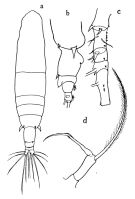 issued from : O. Tanaka in Publs Seto Mar. Biol. Lab., 1965, XII (5). [p.391, Fig.246]. Female: a, habitus (dorsal); b, last thoracic segment and urosome (right lateral side); c, proximal portion of A1; d, P5.
|
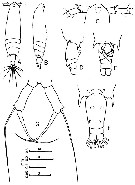 issued from : F.Y. Al-Yamani & I. Prusova in Common Copepods Northwestern Arabian Gulf : Identification Guide. Kuwait Institute for Scientific Research, 2003. [p.88, Fig.31] Female: A, habitus (dorsal); B, idem (lateral right side); C, forehead (dorsal); D, urosome (lateral right side); E, idem (ventral); F, idem (dorsal); G, P5.
|
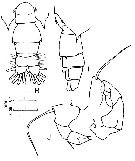 issued from : F.Y. Al-Yamani & I. Prusova in Common Copepods Northwestern Arabian Gulf : Identification Guide. Kuwait Institute for Scientific Research, 2003. [p.90, Fig.32]. Male: H, urosome (dorsal); I, idem (lateral right side); J, P5.
|
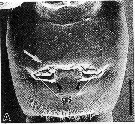 issued from : R.-M. Bathélémy in J. Mar. Biol. Ass. U.K., 1999, 79. [p.865, Fig.8, A]. Scanning electon miccrograph. Female (from Red Sea): A, genital double-somite (ventral); note the thin cuticular lamella under each genital slit (arrowhead). Scale bar: 0.050 mm. Symbols: large arrow = anterior pad; small arrow = opercular pad; gs = genital slit.
|
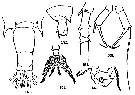 issued from : A. Steuer in Arb. zool. Inst. Innsbruck, 1923, 1 (5). [p.32, Figs.151-156]. Female : 151, last thoracic segment and urosome (dorsal); 15154, proximal segments of A1; 155, P5. Male (after Carl, 1907): 152, last thoracic segment and abdomen (dorsolateral); 153,urosome and caudal setae (dorsal); 156, P5.
|
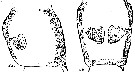 issued from : A. Steuer in Arb. zool. Inst. Innsbruck, 1923, 1 (5). [Taf. III, Figs.25, 26]. Female: 25, genital segment (lateral); 26, idem (ventral).
|
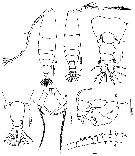 issued from : N. Phukham in Species diversity of calanoid copepods in Thai waters, Andaman Sea (Master of Science, Univ. Bangkok). 2008. [p.139, Fig.13]. Female (from W Malay Peninsula): a, habitus (dorsal); b, urosome (dorsal); c, P5; d, proximal segments of A1. Male: e, habitus (dorsal); f, last thoracic segment and urosome (dorsal); g, P5. Body length after the drawings: F = 1.40 mm; M = 1.30 mm.
|
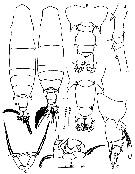 issued from : Mulyadi in Published by Res. Center Biol., Indonesia Inst. Sci. Bogor, 2004. [p.139, Fig.78]. Female (from 03°40'S, 128°10'E): a, habitus (dorsal); b, posterior part of last thoracic segment and urosome (dorsal); c, same with spermatophore (lateral right side); d, proximal segments of A1; e, P5. Male: f, habitus (dorsal); g, last thoracic segment and urosome (dorsal); h, P5.
|
 Erratum: read Srinui and not Siruani. Female: 1 - Genital double-somite having paired posterodorsal processes. 2 - 2nd segment of A1 without strong curved processes. 3 - Exopod of P5 not thickened proximally. 4 - Caudal ramus longer than wide by at most ca 2 times; 2nd free urosomite with small spinules dorsally and posteriorly. 5 - 5th to 7th segments of A1, each lacking hook posteriorlt; genital double-somite with pair of small processes dorsally. 6 - 1st segment of A1 with 2 or more strong processes distally. 7 - 2nd segment of A1 with 4 spinules posteriorly. Male: 1 - 1 - Urosomite 3 without spine-like processes dorsally. 2 - Urosomite 4 with prominences dorally; number of dorsal prominenves on urosomite 4 fewer than 5. 3 - Terminal exopodal segment of left P5 with single element. 4 - Terminal element of left P5 spiniform.
|
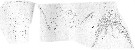 Issued from : J. Carl in Rev. Suisse Zool., 1907, 15. [Pl. I, figs.3-5]. Acartia amboinensis. Male (from Baie d'Amboine = Ambon Bay, Indonesia): 3, last thoracic segment and abdomen (dorso-lateral view); 4, P5 (B2 = basis; Re = exopod); 5, abdomen (dorsal view).
|
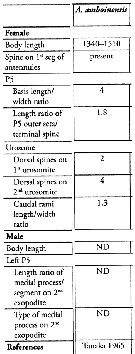 Issued from : S. Lee, H.Y. Soh & W. Lee in ZooKeys, 2019, 893. [p.84, Table 3]. Acartia (Odontacartia) amboinensis: Morphological characters. Compare with other Odontacartia species. Nota: 1 - Presence of spine on 1st to 2nd segments of female A1. ..........2. 2 - Strong spines presengt on dorsal surface of female genital double-somite. .......3. 3 - 4 strong spines present on dorsal surface of female 2nd somite.
| | | | | Compl. Ref.: | | | Sewell, 1948 (p.357, 419); De Decker, 1964 (p.14, 17, 27); De Decker & Mombeck, 1964 (p.11); Carter, 1977 (1978) (p.36); Madhupratap & al., 1981 (p.266, fig.1d: abundance vs. geographic transect); Dessier, 1983 (p.89, Tableau 1, Rem., %); De Decker, 1984 (p.317); Binet, 1984 (tab. 2, 3); 1985 (p.85, tab.3); Madhupratap & Haridas, 1986 (p.105, tab.2); Othman & al., 1990 (p.561, 564, Table 1); Madhupratap & al., 1996 (p.866); Padmavati & Goswami, 1996 a (p.85, fig.2, 3, Table 4, distribution); Padmavati & al., 1998 (p.349); Achuthankutty & al., 1998 (p.1, Table 2, seasonal abundance vs monsoon); Madhupratap & al., 2001 (p. 1345, vertical distribution vs. O2, figs.4, 5: clusters); Rezai & al., 2004 (p.489, tab.2); Kazmi, 2004 (p.228, Rem.: p.232); Jitlang & al., 2008 (p.65, Table 1); Maiphae & Sa-ardrit, 2011 (p.641, Table 2); Pillai H.U.K. & al., 2011 (p.239, Table 3, vertical distribution); Naz & al., 2012 (p.61, Table 4, relative abundance) | | | | NZ: | 5 | | |
|
Distribution map of Acartia (Odontacartia) amboinensis by geographical zones
|
| | | | | | 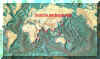 Chart of 1996 Chart of 1996 | |
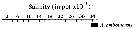 issued from : C.T. Achuthankutty, N. Ramaiah & G. Padmavati in Pelagic biogeography ICoPB II. Proc. 2nd Intern. Conf. Final report of SCOR/IOC working group 93, 9-14 July 1995. Workshop Report No. 142, Unesco, 1998. [p.8, Fig.6]. issued from : C.T. Achuthankutty, N. Ramaiah & G. Padmavati in Pelagic biogeography ICoPB II. Proc. 2nd Intern. Conf. Final report of SCOR/IOC working group 93, 9-14 July 1995. Workshop Report No. 142, Unesco, 1998. [p.8, Fig.6].
Salinity ranges for A. amboinensis in coastal and estuarine waters of Goa (India).
Shaded area indicates the range of higher abundance. |
| | | | Loc: | | | South Africa (E), SE Atlant., Red Sea, Indian (G. of Aden, Arabian Sea, Karachi coast, Arabian Gulf, Kuwait, Madagascar, Nosy Bé, Natal, Goa-Gujarat, Sri Lanka, Bay of Bengal), Barren Island, S Burma, W Malay Peninsula (Andaman Sea), Straits of Malacca, Ambon Bay (S Ceram Islands), Australia (G. of Carpentaria), Viet-Nam (Cauda Bay), Japan (Izu), SW Pacif. (New Caledonia) | | | | N: | 37 (Red Sea: 1; Indian: 26; Indonesia-Malaysia: 3, W Pacif.: 7) | | | | Lg.: | | | (164) F: 1,43-1,33; M: 1,3; (786) F: 1,45; M: 1,32; (937) F: 1,44-1,47; M: 1,29-1,33; (1122) F: 1,35; M: 1,25; {F: 1,33-1,47; M: 1,25-1,33} | | | | Rem.: | neritic-oceanic; epipelagic.
See Acartia australis Table 1 from Ueda (1986, p.18).
For Mulyadi (2004, p.139) this species is closely related with the others Indo-Pacific species A. erythraea, bispinosa, japonica, australis, pitschmani.
See in DVP Conway & al., 2003 (version 1) | | | Last update : 20/06/2020 | |
|
|
 Any use of this site for a publication will be mentioned with the following reference : Any use of this site for a publication will be mentioned with the following reference :
Razouls C., Desreumaux N., Kouwenberg J. and de Bovée F., 2005-2025. - Biodiversity of Marine Planktonic Copepods (morphology, geographical distribution and biological data). Sorbonne University, CNRS. Available at http://copepodes.obs-banyuls.fr/en [Accessed December 24, 2025] © copyright 2005-2025 Sorbonne University, CNRS
|
|
|
|




 amboinensis - Plate 1 of morphological figures',750,500);)
 amboinensis - Plate 2 of morphological figures',750,500);)
 amboinensis - Plate 3 of morphological figures',750,500);)
 amboinensis - Plate 4 of morphological figures',750,500);)
 amboinensis - Plate 5 of morphological figures',750,500);)
 amboinensis - Plate 6 of morphological figures',750,500);)
 amboinensis - Plate 7 of morphological figures',750,500);)
 amboinensis - Plate 8 of morphological figures',750,500);)
 amboinensis - Plate 9 of morphological figures',750,500);)
 amboinensis - Plate 10 of morphological figures',750,500);)
 amboinensis - Plate 11 of morphological figures',750,500);)

 amboinensis - Distribution map 2',650,500);)
 amboinensis - Distribution map 3',750,500);)








 amboinensis - Plate 1 of morphological figures)
 amboinensis - Plate 2 of morphological figures)
 amboinensis - Plate 3 of morphological figures)
 amboinensis - Plate 4 of morphological figures)
 amboinensis - Plate 5 of morphological figures)
 amboinensis - Plate 6 of morphological figures)
 amboinensis - Plate 7 of morphological figures)
 amboinensis - Plate 8 of morphological figures)
 amboinensis - Plate 9 of morphological figures)
 amboinensis - Plate 10 of morphological figures)
 amboinensis - Plate 11 of morphological figures)
 amboinensis - Distribution map 2)
 amboinensis - Distribution map 3)