|
|
 |
|
Calanoida ( Order ) |
|
|
|
Clausocalanoidea ( Superfamily ) |
|
|
|
Clausocalanidae ( Family ) |
|
|
|
Drepanopus ( Genus ) |
|
|
| |
Drepanopus pectinatus Brady, 1883 (F,M) | |
| | | | | | | Syn.: | no Drepanopus pectinatus : Giesbrecht, 1892 (p.201, figs.F,M); Giesbrecht & Schmeil, 1898 (p.29); Scott, 1914; Hardy & Gunther, 1935 (1936) (p.156, distribution charts); Ramirez, 1966 (p.11); Chojnacki & Weglenska, 1994 (p.1000 & suiv.); Arcos, 1975 (Pl.3: figs.F,M);
Drepanopsis pectinatus : Tanaka, 1964, figs.F, ?M) | | | | Ref.: | | | Brady, 1883 (p.77, figs.F,M); Giesbrecht, 1892 (p.201, non figs.F,M); Giesbrecht & Schmeil, 1898 (p.29); Vervoort, 1957 (p.39, Rem.); Séret, 1979 (p.59, figs.F, Rem.); Björnberg & al., 1981 (p.628, Rem.); Bayly, 1982 (p.163, figs.F); Hulsemann, 1985 a (Rev., p.909, figs.F,M); Razouls, 1994 (p.54, figs.F,M); Bradford-Grieve, 1994 (p.127, figs.F,M, p.152, fig.101); Mazzocchi & al., 1995 (p.166: Rem.); Boxshall & Halsey, 2004 (p.93: fig.F); Park & Ferrari, 2009 (p.143, Table 1, Appendix 1, biogeography from Southern Ocean); Xavier & al., 2020 (p.21, fig., Rem.). | 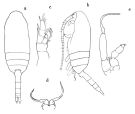 issued from : O. Tanaka in Scient. Rep. Jap. Antarct. Res. Exped., 1964, (E) 22. [Pl.I]. Female: a, habitus (dorsal); b, idem (left lateral side); c, P1; d, P5. Male (doubtful, maybe abnormal): e, P5.
|
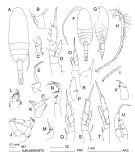 issued from : J.M. Bradford-Grieve in The Marine Fauna of New Zealand: Pelagic Calanoid Copepoda. National Institute of Water and Atmospheric Research (NIWA). New Zealand Oceanographic Institute Memoir, 102, 1994. [p.128, Fig.74]. Female (from Campbell Is.): A, habitus (dorsal); B, genital somite (lateral left side); C, endopod of P1; D, P2; E, P5. Male: F, habitus (dorsal); G, idem (lateral left side); H, left A1; I, terminal segments of right A1; J, A2; K, Md; L, Mx1; M, Mx2; N, Mxp; O, P1; P, endopod of P1; Q, P2; R, exopod segment 2 of P2 (anterior view); S, P3; T, P4; U, P5; V, terminal part of left P5.
|
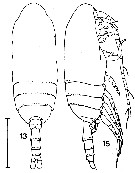 issued from : K. Hulsemann in J. Plankton Res., 1985, 7 (6). [p.915, Figs.13, 15 Female: 13, 15, habitus (dorsal and lateral, respectively). Scale bars: 0.5 mm (Figs.13, 15).
|
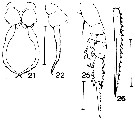 issued from : K. Hulsemann in J. Plankton Res., 1985, 7 (6). [p.918, Figs.21, 22, 25, 26] Female: 21, P5 (ventral view); 22, right P5 (lateral view); 25, right P2 (posterior view); 26, terminal spine of left P2. Scale bars: 0.2 mm (Fig.25); 0.1 mm (Figs.21, 22, 26).
|
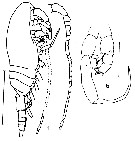 issued from : K. Hulsemann in J. Plankton Res., 1985, 7 (6). [p.912, Figs.1, 5]. Male: 1, habitus (lateral); 5, P5 (anterior view). Scale bars: 0.5 mm (Fig.1); 0.1 mm (Fig.5).
|
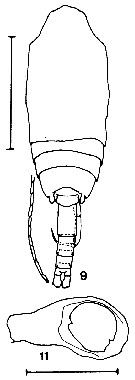 issued from : K. Hulsemann in J. Plankton Res., 1985, 7 (6). [p.914, Figs.9, 11]. Male: 9, habitus (dorsal); 11, Md (mandible blade). Scale bars: 0.5 mm (Fig.9); 0.1 mm (Fig.11).
|
 issued from : K. Hulsemann in J. Plankton Res., 1985, 7 (6). [p.916, Table III]. Total length and prosome:urosome length ratio in adult females. n = 30 individuals.
|
 issued from : K. Hulsemann in J. Plankton Res., 1985, 7 (6). [p.917, Table V]. Various ratios between dimensions in genital segment of adult females. n = 30 individuals.
|
 issued from : K. Hulsemann in J. Plankton Res., 1985, 7 (6). [p.913, Table I]. Total length and prosome:urosome in adult males. n = 30 individuals.
|
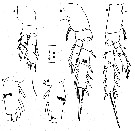 issued from : I.A.E. Bayly in Aust. J. Mar. Freshw. Res., 1982, 33. [p.163, Fig.1]. Female: a, P1; b, P2; c, P3; d-e, endopods of P1 (showing details of spinule row. a-c: drawn from 'Challenger Expedition' syntypes; d-e: from Heard Island material.
|
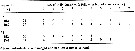 issued from : I.A.E. Bayly in Aust. J. Mar. Freshw. Res., 1982, 33. [p.164, Table 1]. Female: Variation in number of spinules on posterior face of 2nd endopodal and exopodal segments of P2 and P3
|
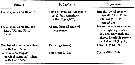 issued from : I.A.E. Bayly in Aust. J. Mar. Freshw. Res., 1982, 33. [p.169, Table 2]. Discrimination of D. bispinosus and D. pectinatus.
|
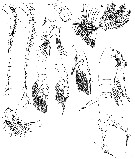 Issued from : G.S. Brady in Rep. Scient. Results Voy. Challenger, Zool., 1883, 8 (23). [Pl.XXIV, Figs.1-11]. Female: 1, habitus (lateral); 2, A1; 4, A2; 5, Md; 6, Mx1; 7, P1; 8, P2; 9, P4; 10, P5. Nota: angle on distal segment of P5 after C. Razouls, 1994. Male: 3, A1; 11, P5.
|
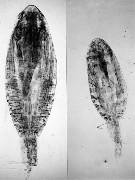 issued from : Golfe du Morbihan (Iles Kerguelen). Female (left side) and Male (lright side). C. Razouls coll.
|
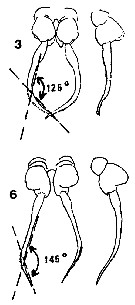 issued from : C. Razouls in Ann. Inst. Océanogr., 1994, NS. 70 (1). [p.57, Pl. 20]. P5 female comparison between D. pectinatus (3), and D. forcipatus (6). Note angle on distal segment of P5.
|
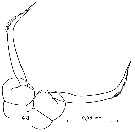 Issued from : C. Séret in Thesis UPMC, Paris 6. 1979 [Pl. VIII, fig.48]. Female (from off Kerguelen Is.): 448, P5.
|
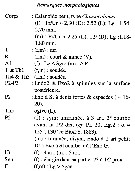 Issued from : C. Razouls in Ann. Inst. océanogr., Paris, 1994, 70 (1). [p.254]. Caractéristiques morphologiques de Drepanopus pectinatus femelle et mâle adultes. Terminologie et abbréviations: voir à Calanus propinquus. Nota: Peut être confondu avec Drepanopus forcipatus Giesbrecht, 1888, localisé dans le secteur de l'Amérique du Sud, Falklands, Géorgie du Sud, mais dont la femelle présente au 3ème segment de P5 un courbure moindre; la soie terminale de l'exopodite 3 de P2 a des dents plus fines et plus nombreused; le mâle présente une P5 uniramée, sans trace d'endopodite.
| | | | | Compl. Ref.: | | | Sewell, 1948 (p.499, 569, 572, 573); Harding, 1974 (p.141, tab.2); De Decker, 1984 (p.315, 325: Rem., 345: carte); S. Razouls, 1985 (p.123, Rem.: ecophysiology); C. Razouls & S. Razouls, 1988 (p.239, seasonal size); Trofimov & al., 1989 (p.426); C. Razouls & S. Razouls, 1990 (p.541, life history); Poulet & Gill, 1991 (p.431, appendage activity, feeding behaviour); Mayzaud & Razouls, 1992 (p.393, feeding, digestive acclimatation); Mayzaud & al., 1992 (p.197, enzyme activity/food concentration); Razouls S. & al., 1996 (p.581, fig.5, spatial distribution); Errhif & al., 1997 (p.422); Mauchline, 1998 (tab.33, 53, 58); Razouls & al., 2000 (p.343, tab. 2, 3, Appendix); Alonzo & al., 2003 (p.525); Fielding & al., 2007 (p.2106, tab.1); Mayzaud & al., 2011 (p.3, lipid and fatty acid composition). | | | | NZ: | 2 | | |
|
Distribution map of Drepanopus pectinatus by geographical zones
|
| | | | | | 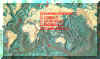 Chart of 1996 Chart of 1996 | |
 issued from : K. Hulsemann in J. Plankton Res., 1985, 7 (6). [p.921, Table VII]. issued from : K. Hulsemann in J. Plankton Res., 1985, 7 (6). [p.921, Table VII].
Distributional records of D. pectinatus (1985). |
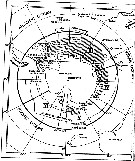 issued from : W. Vervoort in B.A.N.Z. Antarctic Reseach Expedition, Reports - Ser. B, Vol. III, 1957 [Fig.10]. issued from : W. Vervoort in B.A.N.Z. Antarctic Reseach Expedition, Reports - Ser. B, Vol. III, 1957 [Fig.10].
Chart showing the geographical distribution (white triangle) in the seas surrounding the Antarctic continent.
Nota: In this chart the area frequented by whaling vessels has been hatched. The Antarctic circle (66°.5 S) has been drawn as a broken line. The numbers I to VI refer to the sectors into which the Antarctic seas are divided according to Mackintosh (1942) (after Vervoort, 1951). |
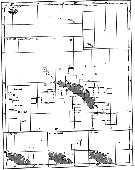 Issued from : A.C. Hardy & E.R. Gunther in Discovery Reports, 1935 (1936), 11. [p.153, Fig.73]. Issued from : A.C. Hardy & E.R. Gunther in Discovery Reports, 1935 (1936), 11. [p.153, Fig.73].
Charts showing the distribution of Drepanopus pectinatus ( = Drepanopus forcipatus) in the upper layers of waters at stations in the 1926-7 surveys around South Georgia.
The squares represent the average numbers per 50 m vertical haul from 250 m (or less at shallow-water stations) to the surface with N 70 V nets. |
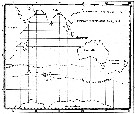 Issued from : C. Séret in Thesis 3ème Cycle, UPMC, Paris 6. 1979, Annexe. [p.28]. Issued from : C. Séret in Thesis 3ème Cycle, UPMC, Paris 6. 1979, Annexe. [p.28].
Geographical occurrences of Scaphocalanus affinis (= S. antarcticus) in the Indian Ocean and Antarctic zone. [after publications from: Brady, 1883, 1918; Thompson, 1900; Wolfenden, 1908, 1911; With , 1915; Rosendorn, 1917; Farran, 1929; Sewell, 1929, 1947; Brady & Gunther, 1935; Steuer, 1929, 1392, 1933; Ommaney, 1936; Vervoort, 1957; Tanaka, 1960; Brodsky, 1964; Seno, 1966; Andrews, 1966; Grice & Hulsemann, 1967; Seno, 1966; Frost & Fleminger, 1968; Voronina, 1970; Zverva, 1972].
C. Séret notes the occurrence around Kerguelen Islands but the percentage diminishes strongly with the distance. |
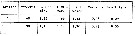 Issued from : C. Séret in Thesis UPMC, Paris 6. 1979 [p.61]. Issued from : C. Séret in Thesis UPMC, Paris 6. 1979 [p.61].
Female (from off N Kerguelen Is.): Lengths of Cephalothorax at two stations: 4 (50°05'S, 70°28'E) and 5 (50°35'S, 69°29'E) from the same date 05.04.1974; surface temperature: 3.64°C and 3.74°C, respectively. |
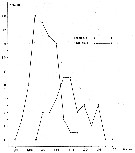 Issued from : C. Séret in Thesis UPMC, Paris 6. 1979 [p.62]. Issued from : C. Séret in Thesis UPMC, Paris 6. 1979 [p.62].
Female: Frequency distribution of cephalothrax length (L.Cth) from station 4 and 5.
Nota: The author notes the lengths of females are higher at the station 4 (closest of Islands) than those at station 5. |
| | | | Loc: | | | Antarct. (off Station Syowa N : 69° S, 39° 35 E), sub-Antarct. (off N Crozet Is., Kerguelen Is., Heard, Is., Campbell Is.), [!? Atlant. N (in Wilson, 1942 a)] | | | | N: | 24 | | | | Lg.: | | | (25) F: 2,7-1,8; M: 1,8-1,58; (114) F: 3-2,7; (246) F: 2,57-1,78; {F: 1,78-3,00; M: 1,58-1,80} | | | | Rem.: | Neritic.
Sampling depth (Antarct., sub-Antarct.) : 0-250 m.
The form reported by Wilson (1942 a, p.17) under this name (at 44 ° N, 33° W) is more probably Drepanopus bungei.
The curve of the P5 female permits to easily distinguish this species from D. forcipatus. In the male , the A1 lacks conspicuous patches of spinules at the base and P5 has a small, 1-segmented endopod on either side.
For the geographic distribution between D. pectinatus and D. forcipatus see remarks to D. forcipatus.
After Bayly (1982, p.170) Tanaka's (1964) records are rather confusing and problematical.
According to Razouls & Razouls (1988, 1990) the fluctuations in the cycles of relative abundance for the different stages copepodites (1 to adults), in association with the significant variations in the sizes of specimens in the various age classeswithin the time series, support the hypothesis that there is a succession of 4 generations in the Morbihan Bay (Kerguelen Islands): 1st generation from October to December (63 days), 2nd generation of December tp mid-February (44 days in 1983 and 49 days in 1984), 3rd generation end-February to mid-April (49 days) and 4th generation April to beginning of September (151 days). Observed pulses of the different cohorts of a given generation result from successive layings by the females on every 5 days in the summer period. Seasonal changes in mean water temperature at the surface (neritic zone) between January 1983 to February 1984 are 7-8°C in subantarctic summer and 2-3°C in subantarctic winter.
The dynamics of coldwater neritic populations, known from subarctic areas, is usually based on 1 generation or a succession of 2 generations. (See Bakke, 1977, Pertsova, 1981, Matthews & al. 1978, Asknes & Magnesen, 1983). | | | Last update : 04/02/2021 | |
|
|
 Any use of this site for a publication will be mentioned with the following reference : Any use of this site for a publication will be mentioned with the following reference :
Razouls C., Desreumaux N., Kouwenberg J. and de Bovée F., 2005-2025. - Biodiversity of Marine Planktonic Copepods (morphology, geographical distribution and biological data). Sorbonne University, CNRS. Available at http://copepodes.obs-banyuls.fr/en [Accessed August 27, 2025] © copyright 2005-2025 Sorbonne University, CNRS
|
|
|
|




;)
;)
;)
;)
;)
;)
;)
;)
;)
;)
;)
;)
;)
;)
;)
;)
;)

;)
;)
;)
;)
;)
;)
;)