|
|
 |
|
Calanoida ( Order ) |
|
|
|
Clausocalanoidea ( Superfamily ) |
|
|
|
Euchaetidae ( Family ) |
|
|
|
Paraeuchaeta ( Genus ) |
|
|
| |
Paraeuchaeta pseudotonsa (Fontaine, 1967) (F,M) | |
| | | | | | | Syn.: | Euchaeta pseudotonsa Fontaine, 1967 (p.204, figs.F,M, Rem.); Grice Hulsemann, 1968 (tab.2, p.329, Rem.); Park, 1975 c (p.19, figs.F,M); Deevey & Brooks, 1977 (p.256, tab.2, Station "S"); Park, 1978 (p.231, figs.F,M, Rem.); Roe, 1984 (p.357); Ward & Wood, 1988 (p.45, tab.1); Mauchline, 1992 a (p.2, 3); 1994 a (p.561); Suarez-Morales & Gasca, 1998 a (p.109); Mauchline, 1999 (n°182, p.8, figs.F,M); Hernandez-Trujillo & Esqueda-Escarcega, 2002 (in Appendix);
Pareuchaeta pseudotonsa : Yamanaka, 1976 (p.171); Vives, 1982 (p.291); Lozano Soldevilla & al., 1988 (p.58); Heinrich, 1990 (p.20: Rem.); Mauchline, 1998 (tab.58);
Euchaeta tonsa : Pearson, 1906 (p.17); Farran, 1908 b (p.13, 44); Wolfenden, 1911 (p.298, figs.F); With, 1915 (p.166, figs.F,M, as Euchaete tonsa); Vervoort, 1963 b (part. p.170, Rem.); Bary, 1963 a (p.1519, Table 1); 1964 (p.183, T-S diagram-occurrences); Owre & Foyo, 1967 (p.57, fig.345); Grice & Hulsemann, 1967 (part., p.16); Vives & al., 1975 (p.42, tab.II); ? Suarez & Gasca, 1991 (tab.2);
Pareuchaeta tonsa : Sars, 1925 (p.122, figs.F,M), Rose, 1933 a (p.120, figs.F,M); Jespersen, 1940 (p.31); Lysholm & al., 1945 (p.24); C.B. Wilson, 1950 (part., p.284: station 2); Marques, 1953 (p.100); Paiva, 1963 (p.43); Mazza, 1966 (p.70); ? Vives, 1982 (p.291);
? Pareuchaeta tonsa Gaard & al., 2008 (p.59, Table 1, N Mid-Atlantic Ridge);
? Paraeuchaeta tonsa: Medellin-Mora & Navas S., 2010 (p.265, Tab. 2) | | | | Ref.: | | | Roe, 1972 (p.277, tabl.1, tabl.2); Bradford & al., 1983 (p.46, figs.F, M, Rem.); Park, 1994 (p.322, 326, 328, biogeo); 1995 (p.74, Rem.F,M, figs.F,M); Bradford-Grieve & al., 1999 (p.880, 926, figs.F,M); Vives & Shmeleva, 2007 (p.668, figs.F,M, Rem.) | 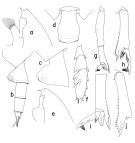 issued from : T. Park in Bull. Scripps Inst. Oceanogr. Univ. California, San Diego, 1995, 29. [p.181, Fig.71]. Female: a, forehead (left side); b, urosome (left); c, genital somite (left); d, idem (dorsal). Nota : Very similar in habitus including forehead and urosome to P. tonsa but distinguishable from it; Laterally, distal end of prosome reaching anterior end of genital prominence. Dorsal margin of genital somite (fig. c) straight ; genital prominence nearly triangular with blunt distal end ; its anterior margin somewhat convex ; its posterior margin only slightly bulging ; dorsally, genital somite (fig. d) with smoothly curved swelling, widest about 2/3 its length from proximal end. Cephalosomal appendages and swimming legs as in P. tonsa. Male: e, forehead (left); f, exopod of P2 (anterior); g, exopod of left 5th leg (medil); h, distal exopodal segments of left 5th leg (lateral, tilted clockwise); i, idem (medial); j, serrated lamella of left 5th leg exopod from different specimen (lateral, tilted clockwise). Nota: The male is not easily distinguishable from that of P. tonsa. The most reliable diagnostic feature is the shape of the toothlike process next to the serrated lamella on the outer distal margin of the 2nd exopodal segment of the left P5, which is relatively short and spiniform, while it is fingerlike and relatively long in P. tonsa.
|
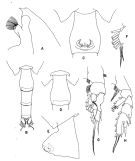 issued from : T. Park in Antarctic Res. Ser. Washington, 1978, 27. [p.233, Fig.85]. As Euchaeta pseudotonsa. Female: A, forehead (lateral); B, posterior part of metasome and urosome (dorsal); C, D, E, distal end of metasome and genital segment (ventral, dorsal, and left side, respectively); F, outer lobe of Mx1; G, P1; H, P2. P1-2: legs (anterior view).
|
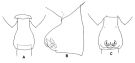 issued from : T. Park in Antarctic Res. Ser. Washington, 1978, 27. [p.232, Fig.84] : Euchaeta tonsa. Female: A, B, C, distal end of metasome and genital segment (dorsal, lateral, ventral, respectively). Nota: P. tonsa and P. pseudotonsa are so similar that they had been confused until Fontaine (1967). See significant differences in the female genital segment: In dorsal view the widest part of the genital segment is nearer the middle of the segment in P. pseudotonsa than in P. tonsa. In lateral view, althrough it is variable to a certain extent, the anterior surface of the genital proeminence is slightly convex rather than flat. In ventral view the posterior ridge of the genital field is narrower in P. pseudotonsa than in P. tonsa than in P. tonsa
|
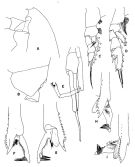 issued from : T. Park in Antarctic Res. Ser. Washington, 1978, 27. [p.234, Fig.86]. As Euchaeta pseudotonsa. Male: A, forehead (lateral); B, last metasomal and genital segments (left side); C, P1; D, P2; E, P5; F, G, H, I, distal part of exopod of left P5, (anterior, medial, and anterior from different specimens, respectively).
|
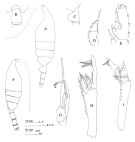 issued from : J.M. Bradford, L. Haakonssen & J.B. Jillett in Mem. N.Z. Oceanogr. Inst., 1983, 90. [p.48, Fig.25]. Female: A, habitus (lateral left side); B, genital segment (dorsal); C, idem (lateral left side); D, exopod of P1; E, exopod segment 3 of P2. - P1 exopod female: Aa ≤ BC; Bb ≤ BC; Cc > BC. - P2 exopod female: Aa > AB; Bb = 1/3 BC; Cc = CD + 1/2 Dd; Dd = 1/4 CD. (see code of lengths outer spines in the Genus' figure, or in Paraeuchaeta sp. A). Male: F, habitus (lateral right side); G, P5; H, medial view of terminal part of left P5 exopod; I, anterior view of terminal part of left P5 exopod. Nota: - P1 exopod male: Aa minute; Bb = 1/3 BC; Cc = 1/2 BC. - P2 exopod male: Aa = 1/2 AB; Bb = 1/2 BC; Cc = 1/3 CD; Dd = 1/4 CD. (see code of lengths outer spines in the Genus' figure, or in Paraeuchaeta sp. A). The males from the south-west Pacific differ from Fontaine's description in that on left P5 the serrated lamella is not very much longer than the digitiform process and exopod segment 3 extends beyond the serrated lamella by between a third and a half its length. All specimens have a row of teeth along one edge of the serrated lamella only (Park, 1978, did find that this species could have two rows of teeth like P. scaphula). It appears that the male of P. tuberculata A. Scott, 1909 could equally well be attribued to pseudotonsa (Fontaine, 1967, considers it to be a synonym of scaphula). The male of pseudotonsa can, according to Fontaine (1967), be distinguished from the male of P. scaphula (See: tuberculata) by the serrated lamella, which is longer than the digitiform process in the former, while of the same length in the latter.
|
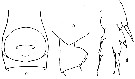 issued from : R.N. Wolfenden in Die Marinen Copepoden der Deutschen Südpolar-Expedition 1901-1903, 1911. [p.298, Fig.50]. As Euchaeta tonsa. Female: a, genital segment (ventral); b, posterior part cephalothorax and genital segment (lateral, right side); c, outer marginof exopod of P1; d, outer margin of exopod of P2.
|
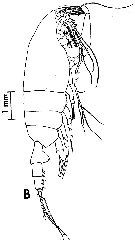 issued from : M. Fontaine in Crustaceana, 1967, 12 (2). [p.196, Fig.1, B]. As Euchaeta pseudotonsa. Female (from Atlantic): B, habitus (lateral).
|
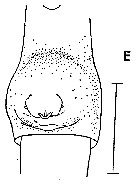 issued from : M. Fontaine in Crustaceana, 1967, 12 (2). [p.198, Fig.3, E]. As Euchaeta pseudotonsa. Female: E, genital segment (ventral).
|
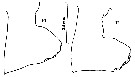 issued from : M. Fontaine in Crustaceana, 1967, 12 (2). [p.208, Figs.1o-11]. Female: 10, showing blunter atypical form of genital segment in Euchaeta pseudotonsa (= Paraeuchaeta pseudotonsa); 11, genital segment of Euchaeta scaphula (:= Paraeuchaeta tuberculata) from Monterey Bay (California).
|
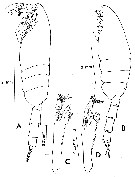 issued from : M. Fontaine in Crustaceana, 1967, 12 (2). [p.207, Fig.9, A-C, B-D]. As Euchaeta pseudotonsa. Male: A, habitus (lateral); C, left P5. Comparison with Euchaeta scaphula (= Paraeuchaeta tuberculata): B, habitus male (lateral); D, left P5.
|
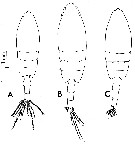 issued from : M. Fontaine in Crustaceana, 1967, 12 (2). [p.197, Fig.2, A-C]. Dorsal views of females: A, P. tonsa, B, P. pseudotonsa (as Euchaeta pseudotonsa); C, P. tuberculata (as Euchaeta scaphula). Nota: In P. pseudotonsa, general shape of cephalothorax the same as in P. tonsa , but tooth on each side of last thoracic segment rather more prononced than in and in P. tuberculata. Dorsally, genital segment not so obviously swollen as in P. tonsa and with its widest part nearer the middle of segment.
|
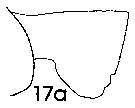 issued from : J. Mauchline in ICES Ident. Leafl. Plankton, 1999, N°182. [p.3, Fig.2: 17a]. As Euchaeta pseudotonsa. Female (Northeast Atlantic): 17a, genital double-somite (left side).
|
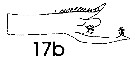 issued from : J. Mauchline in ICES Ident. Leafl. Plankton, 1999, N°182. [p.4, Fig.3: 17b]. As Euchaeta pseudotonsa. Male (Northeast Atlantic): 17b, terminal two segments, exopodal segments of left P5.
|
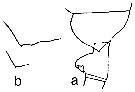 issued from : C. With in The Danish Ingolf-Expedition, Copepoda I, 1915, III, 4. [p.167, Text-fig. 46]. As Euchaete tonsa. Female (from 57°52'N, 9°53'W): a, last thoracic segment and genital segment (left lateral); b, lateral corner from the right. Nota: The lateral corner is more prominent on the left than on the right side; no lateral tuft of hairs.
|
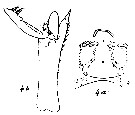 issued from : C. With in The Danish Ingolf-Expedition, Copepoda I, 1915, III, 4. [Pl. VI, Fig.4, a-b]. As Euchaete tonsa. Female: a, labrum in oral view. Male: left P5 (2nd and 3rd distal exopodal segments).
|
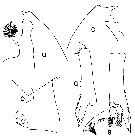 issued from : T. Park in Smiths. Contr. Zool., 1975, 196. [p.17, Fig.14]. As Euchaeta pseudotonsa. Female (G. of Mexico): a, forehead (lateral); b, genital segment (left side). Male: c, forehead (lateral); d, exopod of left P5 (anterior); e, same (medial).
|
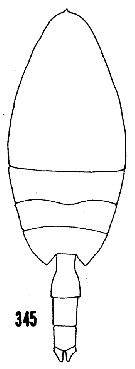 issued from : H.B. Owre & M. Foyo in Fauna Caribaea, 1967, 1, Crustacea, 1: Copepoda. [p.57, Fig.345]. As Euchaeta tonsa. Female (from Florida Current): 345, habitus (dorsal).
|
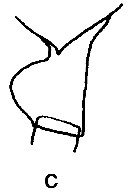 issued from : F. Vives & A.A. Shmeleva in Fauna Iberica, 2007, 29. [p.669, Fig.371, c]. Female: c, corner of the last thoracic segment and genital segment (left side). Nota: In lateral view, tip of the corner sharp-like, located close to the incision of the genital swelling. Laterodorsal margin ot the segment nearly convex.
|
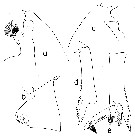 Issued from : T. Park in Smithsonian Contr. Zool., 1975, 196. [p.19, Fig.16]. Female (from G of Mexico): a, forehead (lateral); b, genital segment (lateral). Male: c, forehead (lateral); d, exopod of left P5 (anterior); e, exopod of left P5 (medial). Nota: Tis Atlantic bathypelagic species had been known to be conspecfic with P. tonsa of the Pacific until Fontaine (1967) recognized it as a separate species. In the Gulf of Mexico and Caribean Sea the species was found to be one of the most common bathypelagic ecchaetid species, in tows down to a depth range of 500 to 2000 m.
|
 Paraeuchaeta pseudotonsa Paraeuchaeta pseudotonsa Female: 1 - See key to species Groups and independent species of Paraeuchaeta (p.30). 2 - Laterally, genital field facing ventrad, without large tubercular outgrowth behind genital orifice (Fig.71-c). 3 - Genital somite without tubercular outgrowth on dorsal side (Fig.71-c). 4 - Laterally, posterior edge of genital field not visible (Fig.71-c). 5 - Dorsally, genital somite with smoothly bulging lateral sides (Fig.71-d).
| | | | | Compl. Ref.: | | | Lapernat, 2000 (tabl. 3, 4); Razouls & al., 2000 (p.343, Appendix); Park & Ferrari, 2009 (p.143, Table 5, fig.1, Appendix 1, biogeography) | | | | NZ: | 13 | | |
|
Distribution map of Paraeuchaeta pseudotonsa by geographical zones
|
| | | | | | | | | | | | | | | 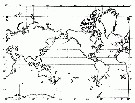 issued from : T. Park in Hydrobiologia 292/293, 1994. [Fig. 2, p.326].
Geographical distribution of Paraeuchaeta pseudotonsa (circle) issued from : T. Park in Hydrobiologia 292/293, 1994. [Fig. 2, p.326].
Geographical distribution of Paraeuchaeta pseudotonsa (circle) |
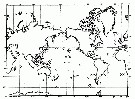 issued from : T. Park in Hydrobiologia 292/293, 1994. [Fig. 4, p.328].
Geographical distribution of Paraeuchaeta pseudotonsa (circle) and P. tonsa (triangle). issued from : T. Park in Hydrobiologia 292/293, 1994. [Fig. 4, p.328].
Geographical distribution of Paraeuchaeta pseudotonsa (circle) and P. tonsa (triangle). |
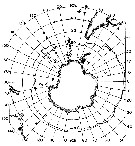 issued from : T. Park in Biology of the Antarctic Seas VII. Antarctic Res. Ser., 1978, 27 (4). [p.235, Fig.87]. issued from : T. Park in Biology of the Antarctic Seas VII. Antarctic Res. Ser., 1978, 27 (4). [p.235, Fig.87].
Occurrence of Euchaeta ( = Paraeuchaeta ) tonsa and E. (= Paraeuchaeta) pseudodonsa.
Crossed circles: stations where tonsa was found; closed circles: stations where pseudotonsa was found; A.C: Antarctic Convergence. |
| | | | Loc: | | | Antarct. (South Georgia, SW & SE Pacif.), sub-Antarct. (SW Atlant. Indian, SE Pacif.), Angola, Sierra Leone, S Atlant., off Uruguay, off S Cape Verde Is., off Mauritania-NW Cape Verde Is., off Morocco-Mauritania, Canary Is., off Madeira, G. of Mexico, Caribbean Sea, ? Caribbean Colombia, Azores, off Bermuda: Station "S" (32°10'N, 64°30'W), off W Cabo Finisterre, Bay of Biscay, Scotland, W Ireland, off Rockall Is., Iceland, North Sea, Ibero-moroccan Bay, Medit. (Algiers Bay), Indian, Tasman Sea, off Juan Fernandez Is., Chile, Drake Passage | | | | N: | 20 | | | | Lg.: | | | (1) F: 6,5; (3) F: 7,3-5,8; M: 6,8-5,7; (7) F: 6,4; M: 5,89; (9) F: 6,5-6,7; M: 6,8-5,5; (10) F: 5,3-5; (18) F: 7,26-6,23; M: 6; (19) F: 6,5-5,83; M: 5,91-5,5; (20) F: 7,25-6,25; M: 6,58-6; (199) F: 6,72-6,08; M: 6,24-5,76; {F: 5,00-7,30; M: 5,50-6,80}
The mean female size is 6.441 mm (n = 15; SD = 0.5681), and the mean male size is 6.057 mm (n = 12; SD = 0.4576). The size ratio (male : female) is 0.936 (n = 5; SD = 0.01110), or ± 94 %. In samples, the sex ratio is likely 1. | | | | Rem.: | meso-bathypelagic.
Sampling depth (Antarct., sub-Antarct.) : 0-2000-4000 m. Sargasso Sea: 500-1000 m (Deevey & Brooks, 1977, station "S");
The discrimination between this species and P. tonsa, Euchaeta scaphula (see P. tuberculata) is very difficult, hence the difficulties to determine with certainty its geographical distribution. For Fontaine (1967, p.209) it is highly probable that all the reports of Euchaeta tonsa (= P. tonsa) from localities in nearly part of the Atlantic Ocean refer in fact to P. pseudotonsa.
This species appears to be essentially Atlantic and sub-Antarctic and secondly Indo-Pacific. Nevertheless Vives (1982, p. 291) reports P. tonsa from the Canary Islands region, and Valdés & al. (2007, p.104: tab.1) in the Bay of Biscay; Gaard & al. (2008 (p.59, Table 1) in N Mid-Atlantic Ridge.
In the Park's samples the species was found throughout the Atlantic between 63°N (east of Iceland) and 36°S, in the eastern and central South Pacific between 35°S and 47°S, the western Pacific including the Tasman Sea between 25°S and 50°S, the eastern Indian Ocean at 17°S, and the western Indian Ocean at 25°S. Its geographic range in the Pacific and Indian oceans is therefore contiguous along its northern border, without significant overlapping with that of P. tonsa, the species most closely related to it. For Park (1995, p.76) this species with P. tonsa and P. tuberculata may have evolved in the Indo-western Pacific, from which P. pseudotonsa moved southward, first occupying the subantarctic seas and then moving into the Atlantic, where the absence of competition, it has expanded its range to inhabit the entire ocean. P. tuberculata expanded its range northward and eastward and P. tonsa was carried eastward, expanding its range both northward and southward as it approached the west coast of America. | | | Last update : 10/08/2016 | |
|
|
 Any use of this site for a publication will be mentioned with the following reference : Any use of this site for a publication will be mentioned with the following reference :
Razouls C., Desreumaux N., Kouwenberg J. and de Bovée F., 2005-2024. - Biodiversity of Marine Planktonic Copepods (morphology, geographical distribution and biological data). Sorbonne University, CNRS. Available at http://copepodes.obs-banyuls.fr/en [Accessed April 26, 2024] © copyright 2005-2024 Sorbonne University, CNRS
|
|
|
|




;)
;)
;)
;)
;)
;)
;)
;)
;)
;)
;)
;)
;)
;)
;)
;)
;)
;)
;)
;)

;)
;)
;)