 Marine Planktonic Copepods
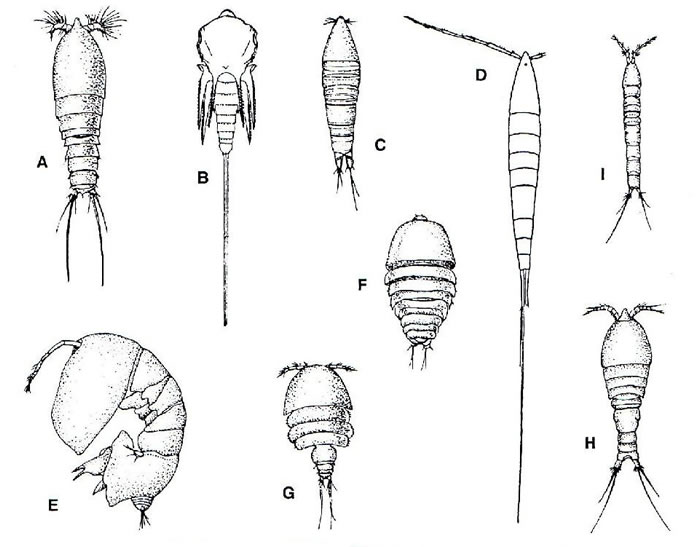
Fig. G5: Various forms of Harpacticoids (after Coull, 1977; Rose, 1933; Dinet, 1977).
A: fusiform benthopelagic (Longipediidae); B: abyssal form with strong thoracic cuticular expansions (Cerviniidae: Pontostratiotes abyssicola); C: fusiform epifaunal, or epibenthic forms (Ectinosomidae); D: fusiform, elongated, with very long furcal setae, pelagic (Miracidae); E: laterally compressed as in amphipods, living on macrophytes (Tegastidae); F: dorsoventrally compressed, on the phytobenthos (Peltidiidae); G: fusiform, dorsoventrally compressed, epifauna of shallow waters (Tisbidae); H: fusiform, laterally compressed, epifauna (Diosaccidae); I: vermiform, interstitial life in sand (Cylindropsyllidae).