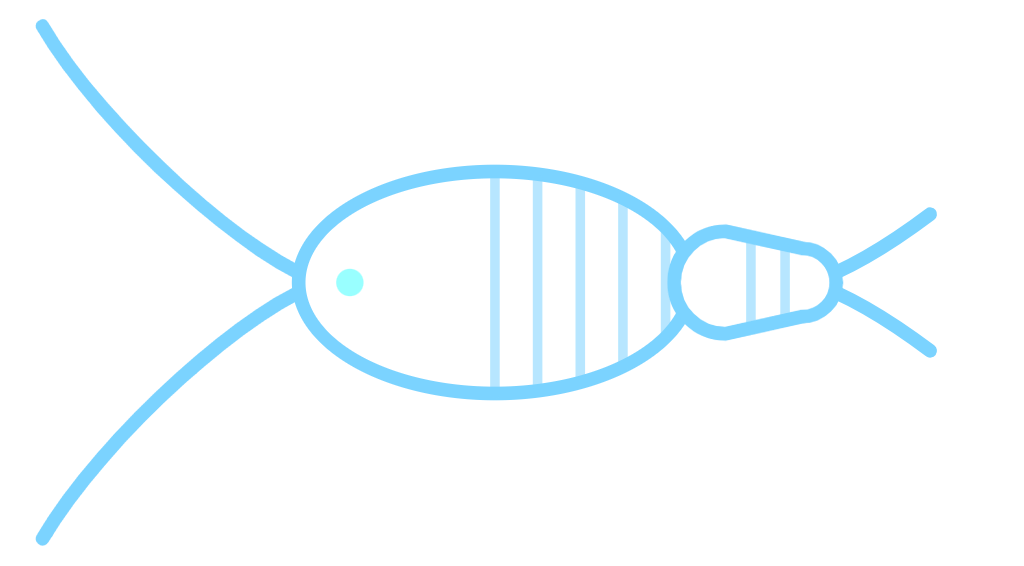
Plate 1 Issued from : T. Scott in Ann. Rep. Fish. Bd Scotland, 1904, 22 (Part III), IV. [Pl. XIV, Fig.1]. As Thaumaleus thomsoni. Female (from off Scarborough, Scotland); 1, habitus (dorsal).
Nota : Cephalothorax about equal to twice the entire length of the remaining segments of the thorax and abdomen combined.
Plate 2 Issued from : T. Scott in Ann. Rep. Fish. Bd Scotland, 1904, 22 (Part III), IV. [Pl. XIV, Figs.2-4]. As Thaumaleus thomsoni. Female: 2, A1; 3, P5; 4, abdomen and caudal rami.
Nota : A1 shoprt and stout, appear to consist of 4 segments, but the 3rd, which is small, seems to be partly coalescent with the 2nd. P5 moderately large, foliaceous, and abruptly wider at the distal extremity, the result of a lobe-like process on the inner distal aspect ; each foot carries 3 apical setae, the innermost of which is considerably shorter than the other two. Abdomen 2-segmented ; 1st segment fully half as long as the last segment of the thorax, and large rand more dilated than the 2nd segment. Caudal rami short, carry 3 moderately elongated setae.
Plate 3 Issued from : E. Suarez-Morales & A. Morales-Ramirez in Proc. Biol. Soc. Washington, 2003, 116 (1). [p.210, Table 2]. Selected taxonomic features in Cymbasoma frondipes. GDS = anterior half genital double-somite globose; IS = inner seta of P5 smallest; IS <50% = inner seta <50% as long as others; L = longest seta on P5; OP on CT = position of oral papilla on cephalothorax; AI/CT = relative length (as a percent) of A1 to cephalothorax; = relative length (as a percent) of position of oral papilla anteriorly on cephalothorax; T = transverse striations on ''neck'' area. Compare with species of Cymbasoma with uniramous P5 armed with 3 setae: C. concepcionae, C. reticulatum, C. bowmani, C. quintanarooense, C. boxshalli, C. bali, C. striatum, C. claparedi, C. tumorifrons.
This form is considered as a synonym of Thaumaleus thompsoni Giesbrecht,1892, although Isaac (1975) considers this species valid. For Grygier & Suarez-Morales, 2018 (p500) Scott"s specimen is undoubtedly not T. thompsoni as stated by Sars (1921) and Rose (1933, p.348: Rem.). Thus, the name 'frondipes' is proposed because the specific name has never been made available since its origibnal proposal as a disclaimed ''nomen nudum'' by Isaac (1975).





;)
;)
;)


