



Geographic distribution of pelagic copepods, or in particular situations (hyperbenthic forms and submarine excavations) in the Mediterranean Sea
by Claude Razouls and Pascale-Emmanuelle Lapernat
Interactive distribution map (Mediterranean Sea, Black Sea)
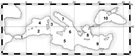
 The map above (modified from Furnestin M.-L., 1979 p.197 in Zoogeography and diversity in plankton. Van der Spoel & Pierrot-Bults (eds). Bunge Sc. Publ., Utrecht.) presents the 10 subzones for the geographical zone Mediterranean Sea, Black Sea.
List of the 10 defined subzones:
- Subzone 1 : Alboran Sea
- Subzone 2 : Basin SW - Balearic Islands
- Subzone 3 : Tyrrhenian Sea
- Subzone 4 : The Western Mediterranean (Basin NE-NW)
- Subzone 5 : South-East and Malta
- Subzone 6 : Ionian Sea
- Subzone 7 : Adriatic Sea
- Subzone 8 : Egeen sea-Rhodos
- Subzone 9 : Levant Basin
- Subzone 10 : Black Sea
The Mediterranean Sea can be divided into two basins West and East, the siculo-Tunisian threshold separating them. The Adriatic Sea (subzone 7) being separately considered.
The West Mediterranean basin is formed of all the subzones 1, 2, 3 and 4.
The East Mediterranean basin is consisted of all the subzones 5, 6, 8 and 9.
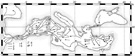 General direction of major currents for the zone Mediterranean Sea, Black Sea (without taking into account the seasonal fluctuations).
Issued from Furnestin M.-L., 1979 p.197 in Zoogeography and diversity in plankton. Van der Spoel & Pierrot-Bults (eds). Bunge Sc. Publ., Utrecht.
;) Changes in the percentage of the main genera or species responsible for secondary production in the neritic region of Banyuls (south-west of the Gulf of Lion, from 1965 to 1968), based on a rating in decreasing order of abundance from 1 to 10 according to the rating system of Frontier (1969).
Changes in the percentage of the main genera or species responsible for secondary production in the neritic region of Banyuls (south-west of the Gulf of Lion, from 1965 to 1968), based on a rating in decreasing order of abundance from 1 to 10 according to the rating system of Frontier (1969).