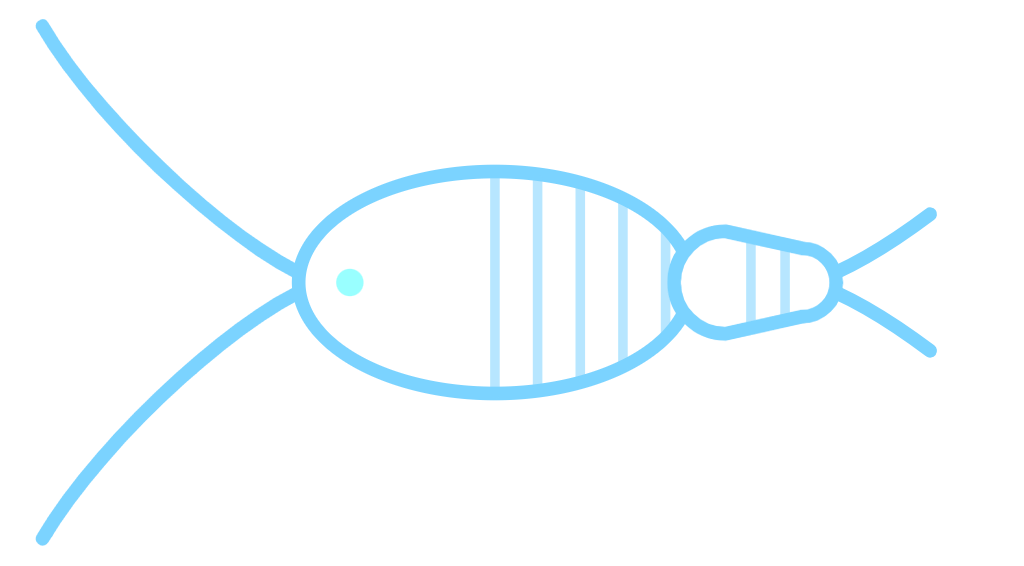



General Features of the External Morphology of Marine Planktonic Copepods
Morphological variations
The sexes are separate in copepods; females and males differ in the number of body segments, the antennules, the mandibles, the fifth pair of thoracic legs, the genital segment and in their dimensions.
Morphological differences between the two sexes can be minimal, for example in the genus Calanus, in which the male is 15% smaller than the female and the 5th pair of legs is only very slightly different. Although in Calanoida the size of females is generally greater than that of males, exceptions exist, as in the genera Paracandacia and Paracalanus for which the dimensions are almost identical, and in Haloptilus where the male body length is approximately 64% of the female length and the P5 are different.
In pelagic Cyclopoida, Poecilostomata and Siphonostomatoida the observations made for Calanoida apply equally.
In Calanoida, as a general rule, the fifth pair of legs of the female is smaller than the preceding pairs, rudimentary or absent, whereas in the male it is developed and different from the swimming legs. It is often transformed into a complex apparatus, always asymmetrical, serving among other functions for the transport of a spermatophore.
In Harpacticoida, the fifth leg, in both sexes, has the form of a scale fringed with setae. It is larger in the female and often covers the ventral egg sac with a protective shield.
The male antennules can be symmetrical as in the female, but their structure differs somewhat. They are swollen at the base, richer in sensory organs, and have fewer segments due to fusions. Often one of the antennules, generally the right one (in dorsal view), is differentiated into a prehensile organ that may be very well developed and equipped with a geniculate articulation (Calanoida). Sometimes both male antennules are prehensile and symmetrical (Monstrilloida, Harpacticoida, Cyclopoida).
The mouthparts may be more or less atrophied in the male, as for example in the calanoids Gaetanus kruppi, Euchirella messinensis, Euchaeta acuta (Mazza, 1966 a).
The fundamental structure of the female genital complex (most often referred to as the "genital segment" in the literature, as a simplification of language) is generally symmetrical with respect to the longitudinal median plane, but in certain cases may exhibit a pronounced asymmetry as in the Pontellidae (Calanoida).
In the female of calanoids, the "genital segment" is larger than the following abdominal segments, clearly dilated on its ventral face (the dilatation due to an internal cavity: the genital antrum or atrium, presenting a pair of dorsolateral pouches: the spermathecae or seminal receptacles) which communicates with the exterior via one (general case) or two genital openings (gonopores) protected by an operculum (vestige of P6). The copulatory pores, which receive the spermatozoa expelled from the spermatheca of the male, are located inside the genital opening, also covered by the operculum. In many cases they may be separated from the gonopores, which are the openings of the oviducts.
In Oithonidae (Cyclopoida), the slit-shaped genital openings are located laterally on the genital segment (double fused somite) and are covered by the modified P6. Each opening comprises a copulatory pore and a gonopore.
In Poecilostomata, the paired genital openings have migrated mostly to a lateral or latero-dorsal position, and even dorsally in Oncaea.
The arrangement of the copulatory pores and seminal receptacles is variable in copepods.
External characters are not the only features that differentiate the sexes. The musculature of the swimming legs or the dorsal muscles of the cephalosome are more developed in the male, in relation to the searching and pursuit behaviour towards the female.
During development the morphology is identical in both sexes, in parallel with the maturation of the sexual products. Sexual dimorphism appears only in the last juvenile stages and mainly at the final moult (copepodite 5 to 6).