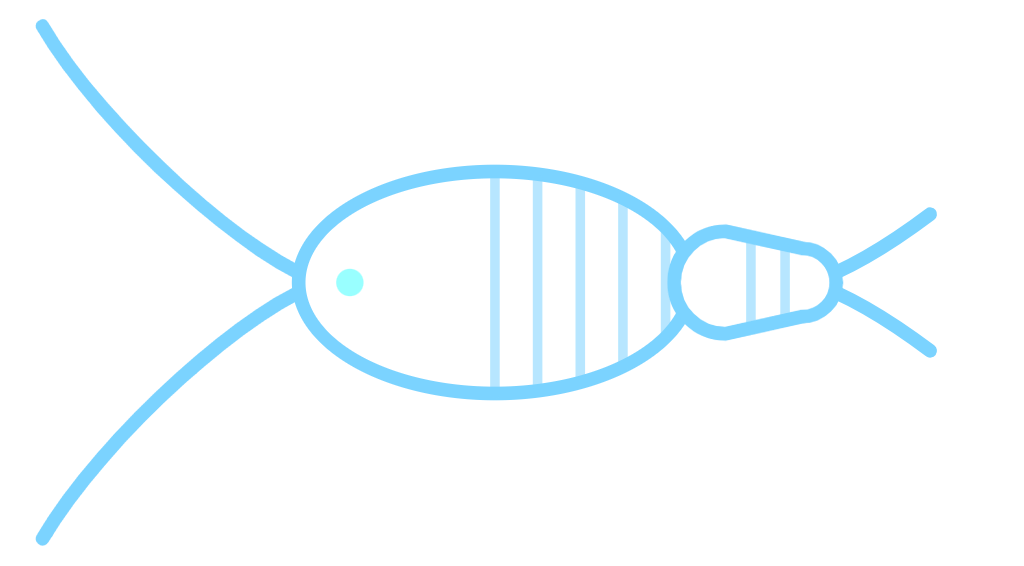



General Features of the External Morphology of Marine Planktonic Copepods
Development time
Intermoult durations for a given stage are a function of temperature, and the expression that best fits the data according to McLaren (1963) appears to be that of Belehradek (1935) of the form D = a (T+alpha) exp(b), where D is the number of days, T the temperature in °C, and a, b, alpha are constants. However, optimal temperature conditions exist in some species, for which a thermal increase may have a negative effect.
Egg development time corresponds to the time elapsed between their release and their moult to the Nauplius I stage. This value is generally obtained from laboratory experiments and it is assumed that this measurement is representative of what occurs in the natural environment (which is not without criticism).
Although each species displays a range of embryonic development durations, there is a temperature range within which embryonic development shows a degree of normality. This optimal range varies among species and corresponds to the majority of eggs hatching. Uye (1991) shows that hatching success in Paracalanus sp. exceeds 60% between 7.5 and 21.3°C and falls below 30% at temperatures above 22.6°C. Oceanic species may be less eurythermal than Paracalanus and may show a narrower range.
Various factors, other than temperature, may introduce differences relative to the equation expressed above.
Hart & McLaren (1978) observe that larger females produce larger eggs with a slower development rate than those of smaller females.
The effects of salinity appear negligible, at least within the tolerance range of the species (McLaren & al., 1968; Uye, 1980).
The rate of embryonic development may be variable not only among eggs from different clutches but also within the same clutch.
The mean egg development time differs between copepods that carry egg sacs and those with free spawning (Kiorboe & Sabatini, 1994), the time being twice as long in the former, independently of egg size.
However, the egg development time in four Pseudocalanus species is related to their size, as is also the case for the same species in different geographical areas (McLaren & al., 1989). A good correlation exists between the coefficient a and the egg size or DNA content in Calanus females.
The eggs of various calanoids do not develop synchronously, giving rise to a range of embryogenesis durations for each species.
Peterson (1986) shows that in Calanus marshallae the egg development time is reflected in the subsequent naupliar and copepodite stages.
As an intrinsic, possibly genetic, factor, Landry (1975) shows that egg development in Acartia clausi is affected by the temperature experienced by the parents. The author suggests that animals acclimated to winter conditions require more than one generation to adapt to summer conditions.
Intermoult durations:
The intermoult, or stage duration, is the period (in hours or days) between successive moults during the development of naupliar and copepodite stages.
Stage duration can readily be observed in the laboratory, either on single individuals or on groups of individuals when the mean stage duration is taken as the time required for 50% of individuals to have moulted to the next stage (Fryd & al., 1991) or at the first appearance of the next stage (Klein Breteler, 1982).
Several development models have been proposed to account for the observed intermoult durations:
1/ Equiproportional development:
The term equiproportional development was introduced by Corkett (1984) to describe development as a function of time regardless of temperature. In this model, each stage occupies the same proportional amount of time relative to the embryonic development time at the temperature considered, according to the Belehradek equation (see in Mauchline, 1998, table 48). A family of curves (see in Mauchline, 1998, fig. 62) thus allows prediction of the development time of the various stages at different temperatures.
This empirical approach may however differ from experimental results. Thompson (1982) uses a different equation: Log.e D = a - b T, less commonly used than the Belehradek equation.
The hypothesis of equiproportional development and the adoption of a common value of b= -2.05 allows comparisons of development times among different species.
An example of this development model is given by Calanus helgolandicus (in Mauchline, 1998, fig. 63). The following species conform to this model (in Mauchline, 1998, tab. 51): Calanoides carinatus, Calanus finmarchicus, C. helgolandicus, C. pacificus, C. sinicus, Centropages typicus.
2/ Isochronal development:
Miller & al. (1977) coined this term to describe development in Acartia species, in which all stages have virtually the same duration. The same appears to be the case in Euterpina acutifrons (a marine planktonic harpacticoid), although in this species the last two intermoults are of longer duration.
Only the earliest naupliar stages (which live on their reserves) may show a departure from the linear progression.
The development rate at different temperatures is calculated using the Belehradek equation, as for equiproportional species.
The following species conform to this model (in Mauchline, 1998, tab. 51): Acartia californiensis, A. clausi, A. steueri, A. tonsa, A. tsuensis, Centropages hamatus, C. typicus, Eurytemora affinis, E. herdmani, Paracalanus aculeatus, Pseudocalanus elongatus, Temora longicornis, T. turbinata.
3/ Sigmoidal development:
This model, described by Peterson (1986), applies when the development rates of the earliest naupliar stages are lower than those of the later naupliar stages, and when the last copepodite stages show longer development times than the preceding ones.
Calanus marshallae provides a good example (in Mauchline, 1998, fig. 63).
4/ Non-conforming development:
In some cases, stage duration varies in an irregular manner. A re-examination of these species using more appropriate methods should allow their growth model to be determined more precisely.
The following species conform to this model (in Mauchline, 1998, tab. 51): Acartia clausi, Calanus australis, C. finmarchicus, C. helgolandicus, Centropages hamatus, Pseudocalanus elongatus, Pseudodiaptomus hessei, P. marinus, Temora longicornis.
Remarks:
As can be seen from an examination of the species listed, some may, according to their authors, conform to several models.
Naupliar stages that do not feed have shorter durations than subsequent ones, whereas the first feeding stage has a longer duration (Landry, 1983).
A few species, probably not many, begin feeding at N I (e.g. Pseudodiaptomus coronatus) while others begin at N II (e.g. Acartia spp., Rhincalanus nasutus), the majority at N III or N IV, and even at N V in Calanus hyperboreus.
Sekiguchi (1974) relates the onset of feeding in the nauplius to the development of the gnathobase of the mandible. The author reports a longer duration for N VI, which has not yet begun feeding, in the Euchaetidae. In Paraeuchaeta norvegica, the first nauplii have durations of 24 hours while N VI lasts approximately 5 days (Nicholls, 1934).
Copepodite development may show variations in relation to gonadal development, notably between CIII and CIV (the stage at which sexual characters appear in numerous species (Razouls & al., 1987).
Klein Breteler & al. (1994) review the various methodologies and establish a "mean development time" (MDS), for which it is desirable to determine the standard deviation (Carlotti & Nival, 1991).
Peterson (1986) observes that eggs of Calanus marshallae from the same clutch display a range of development times. An egg with rapid development will also develop rapidly through subsequent stages, and conversely for more slowly developing eggs. The same applies to different clutches, which show the same alternatives as described above.
The analysis of cohorts in vitro as well as in the natural environment (with greater difficulty) allows estimation of the mean development time of stages and generations (see in Trujillo-Ortiz, 1995).
Development may be interrupted at any stage, most commonly at copepodite stage 4 or 5, with entry into dormancy (quiescence, diapause) for periods that may last several months. This phenomenon is well known in freshwater or moss-dwelling forms, less well established in marine forms, in which Hicks and Coull (1983) demonstrate encystment in some harpacticoids. This entry into a state of reduced activity may be triggered by unfavourable environmental factors (variations in chlorinity, temperature, anaerobiosis, and naturally desiccation) or be linked to the biological cycle of the species (seasonal interruption of development). In Calanus finmarchicus, a vertical migration of stage 5 is observed with developmental arrest. Fertilization takes place, but the female ovaries remain inactive for nearly six months thereafter. This feature appears to be general in planktonic forms from polar waters (ontogenetic migration).
Adult lifespan may reach one year in Calanus finmarchicus, but is undoubtedly shorter under natural conditions, and even more so at lower latitudes. Body size, through its persistence in the environment, can provide an indication of the longevity of certain individuals within a generation.