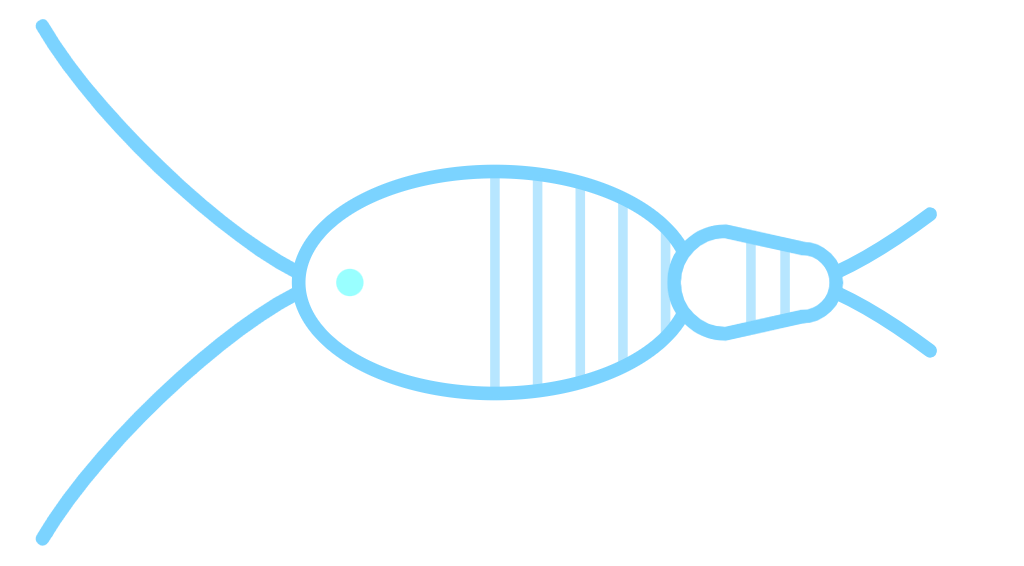



General Features of the External Morphology of Marine Planktonic Copepods
Dimensions
The type animal such as adult Calanus finmarchicus measures 2.42 to 5 mm in the female, which is always larger than the male (2.57 to 3.98 mm).
The dimensions of free-living adult copepods are highly varied, ranging from less than half a millimetre (0.29 mm in a species from littoral subterranean brackish waters, Parastenocaris vicesima Klie, 1935) to more than a centimetre (18 mm in a marine bathypelagic species, Bathycalanus sverdrupi Johnson, 1958).
As a general rule, female size always exceeds that of the male. The male/female ratio calculated for pelagic species is:
| Order | Male/female ratio |
|---|---|
| Calanoida | 0.914 (standard deviation = 0.0791) |
| Harpacticoida | 0.852 |
| Cyclopoida | 0.879 |
| Poecilostomatoida | 0.945 |
| Monstrilloida | 0.621 |
Growth ceases once the adult stage is reached and the final size is definitively acquired.
It should be noted that for a given species, dimensions may be variable within the same population, as well as over the annual cycle, in relation to temperature variations (size generally decreasing with increasing temperature).
An approximate estimate of the mean size of the group is close to 1 mm, the largest species being the planktonic copepods, and the smallest those living on or within substrates, whether marine or freshwater.
‹ Morphology of the various body parts and appendagesBody forms ›