


General Features of the External Morphology of Marine Planktonic Copepods
The Mandibles
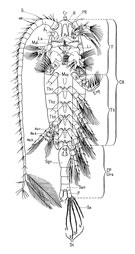
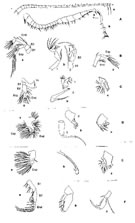
In gnathostome copepods, the appendage is of the biramous type with an exopodite and endopodite (fig. G3, C).
The precoxae is a chitinous expansion bearing teeth at its distal extremity: the molar process. In certain harpacticoids, the latter can be interpreted (Lang, 1965) as presenting a distinct <<pars molaris>> separated from the cutting edge formed by the <<pars incisiva>> and a <<lacinia mobilis>> (mobile blade characteristic of higher Crustacea).
Perpendicular to the masticatory blade in the plane of the mouth, a reduced coxa and a basis are observed, the latter bearing laterally a multi-segmented exopodite and, at its distal extremity, an endopodite with fewer segments.
1 In Calanoida, the appendage is the least modified (fig. G3, C, a), but the evolutionary trend shows that the exopodite tends to disappear before the endopodite. The latter, as well as the basis, can subsequently also disappear, as observed in gnathostome harpacticoids and cyclopoids.
The coxa bears a chitinous expansion: the gnathobase, toothed at its distal extremity (pars molaris), which partially obstructs the mouth (Nival and Nival, 1978). The coxa is reduced, its axis perpendicular to the masticatory blade. The basis bears an exopodite of 5 segments and an endopodite of 2 segments (or perhaps 6 and 3 respectively, according to Vaupel Klein, 1985). Huys and Boxshall (1991) consider that ancestral segmentation is retained in Pleuromamma xiphias.
Males of several calanoid families exhibit, at the adult stage, a more or less marked atrophy of the mandibles, particularly of the masticatory blade (Mazza, 1966). This blade is totally atrophied in Eucalanus elongatus, reduced and without dentiform expansion in Gaetanus kruppi. Mazza (1967) emphasises that the mouthparts are identical in both sexes at juvenile stage 5. The reduction of the mouth appendages does not reach the same degree in all families and affects either the prehensile parts, or the masticatory parts, or in extreme cases both simultaneously. This suggests reduced nutrition in males and consequently a shorter lifespan in the latter. The sex-ratios observed for adult stages would be the result of this.
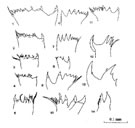
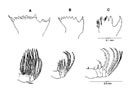 The gnathostome-type mandible can show variations according to the dominant feeding mode, linked to the nature of the surrounding particles. Strict herbivores, such as Calanus finmarchicus, display a masticatory blade with a distal portion bearing multiple strong, short, subequal teeth. In other genera this blade consists of two parts, with teeth of distinct shapes, reflecting an evolutionary trend toward an omnivorous diet, while in others the diet is more clearly carnivorous (Anraku and Omori, 1963; Omori and Ikeda, 1984; Schnack, 1989). (fig. G7).
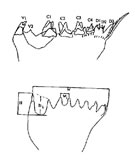
Itoh (1970) established an algorithm describing the structure of the pars incisiva edge based on the number of teeth, their spacing and their height. The resulting index (Ie or "Edge Index") ranges from 100 to 3000.
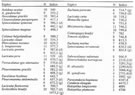
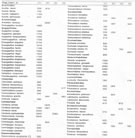
From examination of consumed food items, he established three groups: species with an index below 500 correspond to herbivores, those with an index between 500 and 900 are omnivores, and those with an index above 900 are carnivores (cf. table in Lapernat and Razouls, 2001) (Figs. G8, G9, G10). However, examination of the triturating plate, which is often complex, shows that the Itoh index can only imperfectly reflect the feeding mode, particularly in omnivorous forms, which are most often opportunistic.
 The numerous experimental studies on the nutrition of pelagic copepods, mainly in calanoids and more rarely in other orders (Oithona, Corycaeus and Oncaea), reveal that the diet depends on the concentration of available prey and their size (see lit. in Bonnet et al., 2004).
The number and shape of teeth vary within a single genus such as Calanus as a function of latitude (Vyshkvartzeva, 1975) (Fig. G11). These teeth are related to the nature of the algae consumed and, consequently, indirectly to temperature.
The presence of a silica crown on the teeth is an indispensable adaptation for grinding diatom frustules, and the silica content of the environment may constitute a factor affecting mandibular structure (Miller et al., 1980).
In the family Heterorhabdidae (Calanoida), Heptner (1972) demonstrates that species evolution occurs on the basis of mouthpart structure linked to feeding mode, which evolves from a filter-feeding mode (Disseta) to a suctorial carnivorous mode (Heterorhabdus), passing through euryphagous forms (Heterostylites). In certain forms, the distal extremity of the masticatory blade shows, on the ventral side, a particular tooth bearing a canal with a subterminal pore and a basal aperture fitted to a cuticular pore of a labral gland located beneath the posterior face of the labrum. It is assumed that an anaesthetic or poison could thereby be injected into the prey (Nishida and Ohtsuka, 1996).
2 In Harpacticoida, a reduction of the exopodite is observed, which tends to disappear before the endopodite itself, the latter also reduced and replaced by setae on the basis. The molar process, well developed in benthic forms with a pars molaris bearing strong teeth, may be reduced in a pelagic form such as Microsetella, but remains powerful in Volmannia.
It is within the Cyclopoida (in the broad sense) that structural diversity is greatest and has given rise to controversy, up to the synthesis of Kabata (1979), adopted in its broad outline by most specialists of free-living or parasitic copepods.
Previously, Sars (1918) had recognised the necessity of establishing groupings (or Sections) defined by reusing Thorell's terminology.
3 In free-living Cyclopoida, the exopodite and endopodite are reduced, inserted on a broad basis, the molar process is well developed with strong teeth (hence the old section of Sars, 1913 (1918) p.3, Cyclopoida gnathostoma), as in the Cyclopina, and with fewer, more acute teeth in the Oithonidae, suggesting a more carnivorous than herbivorous diet.
4 Free-living or commensal Poecilostomatoida have unsegmented, very inconspicuous mandibles with a greatly reduced exopodite. The distal parts of the appendage bear short setae (fig. G3, C, b1).
The apparent absence of a pair of mouthparts was attributed by Sars to the disappearance of the mandible, but it was subsequently demonstrated (Gurney, 1933; Bocquet and Stock, 1963) that it is the maxillule that is absent.
These appendages are evidently adapted neither for chewing nor for sucking, but most likely, as Sars (1918) suggests, for licking fine organic particles distributed over the surface of various organisms. This is not, however, confirmed in the case of Oncaea (Turner, 1986). In the few cases studied, examination of the digestive contents does not show fundamental differences from those of calanoids.
The parasitic or necrophagous tendency of the group is certain, but the host is not always clearly defined owing to the mobility of free-living species. Some, from this epibenthic mode of life, have come to occupy vacant ecological niches in the plankton, as for example the families Oncaeidae and Corycaeidae, and the Sapphirinidae, in which a tendency toward commensalism is demonstrated by their association with pelagic tunicates.
The typical sickle-shaped form indicated by Kabata (1979, p.28) shows in the Clausidiidae, Corycaeidae, Oncaeidae, and Erebonasteridae two small blades separated at the distal extremity of the gnathobase. In Lubbockia, the sickle shape is maintained. In Paralubbockia, the mandible shows sexual dimorphism suggesting reduced nutrition in the male (Huys and Boxshall, 1991, p.288). In Paralubbockia longipedia, the female mandible is stronger than that of the male.
The siphonostome cyclopoids, by virtue of their tubular mouth, confirm semi-parasitic and parasitic behaviours. The mandibles are modified according to variations in the development of the labrum and labium, or they generally take on a styliform appearance (fig. G3, C, b2).
5 In free-living Siphonostomatoida, but probably commensal on planktonic invertebrates or fish (Ratania, Pontoeciella and Hyalopontius), the gnathobase is long, styliform, finely denticulate at the distal extremity, without a palp in pelagic forms. A rudimentary two-segmented palp bearing two setae at the apex can still be observed in a form that has retained this plesiomorphic character (Asterocheres reginae).
6 The Monstilloida represent an ultimate stage in which both females and males are completely devoid of the appendages that contribute to nutrition in other groups. They are nonetheless capable of living freely in coastal marine plankton, utilising reserves accumulated during their development as internal parasites of polychaetes and prosobranch molluscs (a type of parasitism termed protelian). This group exemplifies the distinction long made between free-living and parasitic copepods, with a whole series of transitions observable in other orders.
‹ The oral frame: Labrum and labiumThe Maxillules or first maxillae ›