


General Features of the External Morphology of Marine Planktonic Copepods
Larval forms
Hatching gives rise to a characteristic larval form: the nauplius. Hatching proceeds in two stages: the egg is enclosed within two coats. The first ruptures, releasing the second, thinner coat, which expands in volume leaving a space around the embryo as it begins to move. The osmotic rupture of the second envelope releases the nauplius.
Subsequent development in free-living copepods proceeds with great uniformity; the adult state is reached through a series of transformations occurring after each moult.
Development is divided into two main phases, each comprising a certain number of stages.
1- The nauplius phase:
It comprises 3 nauplius stages and 3 metanauplius stages in calanoids and harpacticoids, and sometimes fewer in cyclopoids (5 or 6).
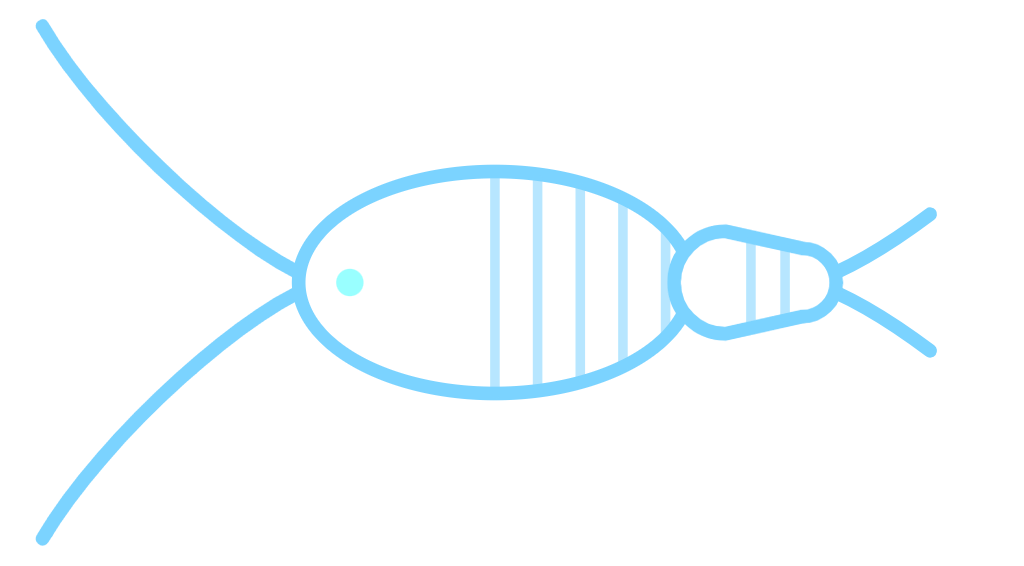
The nauplius is characterised by an oval, unsegmented body bearing:
- a ventral mouth surmounted by a large labrum;
- a large unpaired median eye in the frontal region (nauplius eye, absent in Misophrioida), consisting of 3 adjacent ocelli (2 dorsal, 1 ventral);
- 3 pairs of short, multisegmented lateral-ventral appendages: the uniramous antennules (A1), and the biramous antennae (A2) and mandibles (Md);
- a pair of excretory glands opening at the base of the A2;
- a posterior extremity often bearing 2 short setae.
The metanauplius is characterised by the appearance of buds or rudimentary appendages posterior to the mandibles, traces of segmentation, the development of setation on the anterior appendages, and the differentiation of a dorsal carapace.
The study of the structure and locomotion mode of nauplius and metanauplius stages may assist in establishing phylogenetic relationships. It is probable that nauplius stage 1 (orthonauplius) is the form most closely related to the ancestral nauplian form, as it is the least differentiated stage in the ontogenetic cycle (Björnberg, 1972).
2- The copepodite phase:
It comprises six stages and is characterised by the elongation of the body and a clear separation between the anterior and posterior regions. Segmentation becomes more distinct.
The first copepodite stage has 3 free thoracic segments with two pairs of biramous legs and a rudiment of a third pair; the abdomen consists of 1 segment terminated by the furca. New organs appear (heart in calanoids, maxillary glands) while the antennal glands degenerate. Although it cannot be described as a true metamorphosis, some authors refer to an equivalent phenomenon.
At each moult an additional segment is added, and the number of swimming legs is progressively completed; secondary fusions (secondary sutures) may also occur.
Secondary sexual characters appear as early as stages 3 or 4 and are complete at stage 6, which corresponds to the adult stage. It is considered that no post-imaginal moult occurs.
The pattern that appears most general in calanoids and harpacticoids involves eleven moults from hatching to the adult, exceptions being very rare. In free-living cyclopoids (a heterogeneous grouping) a reduction of this number may occur.